

A small stream of water leaking from the air gap next to your faucet can be easy to overlook at first. But over time, even a minor leak can signal a bigger issue with how your system is draining. An air gap is designed to protect your drinking water by keeping dirty drain water from flowing back into your system. When water backs up and spills out of your air gap, it means the drain line isn’t clearing like it should. In this article, we’ll walk through the most common reasons air gaps leak, how to fix the problem, and what you can do to prevent it from happening again.
What is an air gap?An air gap is a backflow prevention device installed in your countertop or faucet that serves as a precaution against dirty drain water flowing back into your clean water sources. Whenever a drinking water supply, dishwasher, or other appliance requiring clean water connects to a drain, plumbing codes often require backflow prevention. Air gaps are the simplest and easiest backflow prevention device that meets plumbing code.
If you live in a municipal area, reverse suction caused by heavy use of a nearby fire hydrant could cause backflow from your sewer drain.
Without an air gap, the dirty water flows back up the drain and directly into your water source, introducing bacteria and contaminants.
With an air gap, the dirty water flows back up the drain and out through the air gap, typically redirecting into a sink.
An air gap protects your clean water sources, such as a reverse osmosis (RO) system or a washing machine, from contamination.
How do I know if my faucet has an air gap?If you’re unsure whether your faucet system is designed with an air gap, check underneath your countertop.
-
An air gap faucet has three tube connections on the bottom of the fixture. One tube is for the drinking water from the RO system, and the two smaller tubes carry the RO drain water through the air gap and to the sink drain.
-
A non-air gap faucet has one large tube for clean water input and is not designed for an air gap.
If you want to add an air gap to your sink system to comply with plumbing code or install an RO system, you can replace your current faucet fixture with an air gap faucet, attach a dual inlet air gap on your fixture if you prefer a specific design of faucet, or install a dedicated drinking water faucet to attach to your under-sink RO system.
How to locate your air gapAn air gap can be visible as an individual fitting on your countertop or hidden inside a faucet system.
Here’s where to look:
-
An appliance air gap, usually for a dishwasher, is a small, two-inch fitting installed on your countertop next to your faucet.
-
A faucet air gap will have a small hole on the drinking water faucet base and three tube connections below the countertop.
Installing a backflow prevention device like an air gap is often required for dishwashers, washing machines, water softeners, and reverse osmosis systems. The size of your air gap just depends on the flow rate of the water going through it.
Is an air gap necessary?While air gaps are not necessary for RO systems or appliances to function, they are usually specified as the required backflow prevention device according to state plumbing code.
-
A faucet air gap is typically required for an RO system to drain brine water safely.
-
A dishwasher air gap is commonly required as a precautionary measure, but it is not necessary for a dishwasher to function properly.
If your sewer drain backs up into your RO system or appliances, bacteria will flood into your clean water, perhaps without your knowledge. Contamination from sewer water can be an expensive and time-consuming fix. If you’re unsure whether air gaps for faucets or appliances are required in your area, check your state’s plumbing codes or consult a local plumber.
Dishwasher air gap alternatives
If a backflow prevention device is required for your dishwasher but an air gap is not specified, you may be able to use one of these two methods:
-
A high loop runs the drain line from the dishwasher up to the highest point of your undersink cabinet, which must be at least 32”. Dirty water is forced up over the peak to drain, but backflow is less likely to be pushed back up the drain line and into the dishwasher.
-
A dishwasher standpipe is a complicated and less effective method of preventing backflow that involves installing a vertical length of pipe above a P-trap underneath your sink.
Neither of these methods are as effective as an air gap.
Learn more: What Are Dishwasher Air Gaps and Are They Necessary?
How does an air gap work?The outward design of your air gap may change between applications, but the primary principle of an air gap stays the same: there is a gap of air between the inflow and outflow lines to the drain.
How a drinking water faucet air gap works

If you have an under-counter reverse osmosis (RO) system, you’ll need an air gap drinking water faucet. Reverse osmosis separates contaminants from water molecules, producing water waste called brine. To dispose of the brine, the RO system pushes brine up through the input line of your air gap and down the output line to your drain.
The gap of air between the input and output lines prevents drain water from backing up into your RO system through the brine lines. If there is a line blockage or backup of water from your drain, the water will flow through the air gap hole onto your counter or into your sink instead of back into the RO system.
How a dishwasher air gap works
A dishwasher air gap creates a physical gap of air between two drain hoses. When your dishwasher drains, water flows up through the first hose over a peak and into the air gap. From there, it drops through the second hose into the sink drain or garbage disposal. The gap of air in the middle of the drain line prevents dirty water from your sewer from backing up the drain line so that it can’t siphon back into the dishwasher and contaminate your clean dishes.
If the drain or tubing becomes clogged or your sewer begins to back up, a hole in the air gap fitting redirects the flow of dirty water into your sink. A leaking dishwasher air gap indicates that your drainage tubes are clogged and require cleaning.
Browse Tomlinson air gap faucets or Watts designer faucets
Why is my air gap leaking water?Water leaking from an air gap in an RO system or dishwasher results from improper installation or a restriction, preventing water from flowing to the drain. Gravity is the only force that moves water from the air gap to the drain, so any resistance causes the water to back up and leak from the air gap hole.
What causes an air gap leak?A clogged drain line
The most common cause of an air gap leak is a clogged drain line. If your air gap system has been installed for some time without leaking and the sink drain still flows normally, then the connection at the drain pipe itself may be blocked.
Here are the most common causes of a clog in a drain line:
-
The RO system can gradually deposit a jelly-like substance. Because the RO membrane is continuously rejecting contaminants, the brine it sheds into the drain line can eventually cause a jelly to accumulate in the drain lines.
-
A slow sink drain can improperly dispose of debris. With a lack of appropriate water flow, a slow-running sink drain may cause debris to collect in your drain line and block the flow of water.
-
Water with a high concentration of contaminants can build a blockage. The more contaminants and dissolved solids in the feed water, the greater the chance for accumulated debris.
If your air gap is leaking because of a blockage in the drain line, the good news is that it’s a simple process to clear it yourself and resolve the problem without incurring unnecessary costs.
Improper installation
If your air gap leaks after being recently installed, it’s likely because of improper installation. An air gap leak can also be caused by a previously installed drain line connection under the sink being knocked or pulled into a different position on the pipe. Here’s what can happen:
-
The connecting fixture can get misaligned. An air gap drain line is connected to the drain pipe under your sink using a small fixture aligned with a hole. If that fixture gets bumped and rotated away from the hole, the water will not be able to drain.
-
The tubing can be too long. Too much tubing between the drain pipe and the air gap can cause water to accumulate in the bottom of a dip, eventually backing up the air gap.
Having an air gap leak doesn’t have to mean calling a plumber. If you’ve noticed your air gap leaking water, you should be able to fix the problem yourself by adjusting or clearing the system.
How to fix improper installation
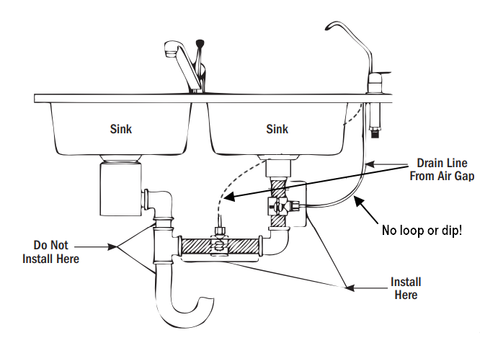
An air gap leak can be caused by improper installation or a disturbance to the mechanism underneath your sink.
Adjust the tubing length and placement
Because gravity pulls the water down from the air gap and water can’t climb uphill, drain tubing should run as straight as possible from the air gap to the drain pipe. When installing, locate a place where the tubing can run straight to the drain pipe without low looping or dipping. Excess tubing can cause water to back up the air gap if it dips below the location of the saddle clamp, the fitting that holds the tubing in place on the pipe.
Align the drain pipe hole and tubing
The tubing from an air gap is aligned with a small hole in the drain pipe and held in place with a saddle clamp. If the tube and the hole are not aligned when installed, the water cannot drain, and your air gap will start to leak.
To properly install, insert a pencil or small screwdriver through the fitting to ensure proper alignment. Apply the clamp, tighten it, then drill the hole. Be careful not to damage the tube connection fitting.
Rotation can also occur over time if your system under the sink gets bumped. To fix a misaligned tube, disassemble your tubing and make sure the hole is properly lined up with the clamp before retightening.
Install away from the garbage disposal
If you’re installing an air gap for the first time, place the drain saddle as far away from a garbage disposal as possible. A disposal can shoot debris into the air gap drain line and block the water, causing it to clog.
If your dishwasher drains to your garbage disposal, install a dishwasher/RO drain line adapter that allows you to also connect the RO drain line.
NeoPure Dishwasher/RO Drain Line Adapter - Universal Fit ( 1/4" and 3/8")
How to clear a clogged air gap
Air gaps back up when something obstructs water flow, and most often it’s a blockage in the drain tube at the saddle connection that needs to be cleaned out. Clear accumulated debris by taking the tubing apart from the saddle and flushing.
Here’s how:
-
Disassemble the clamp assembly on the drain pipe.
-
Clean the clamp assembly, drain pipe hole, and air gap tubing thoroughly.
-
When reassembling the saddle clamp, make sure the tubing lines up with the hole in the drain pipe.
How can you prevent an air gap leak?
You may not be able to completely eliminate the occasional air gap leak, but you can minimize the frequency with which they occur by following a few preventative measures.
-
Avoid rinsing large chunks of food or other objects that might cause an obstruction down the drain.
-
Treat your drain with MegaMicrobes, an all-natural drain cleaner that keeps biofilm and other organic waste build-up in your drain under control.
-
Clean your drain during your annual filter replacement on your RO system to prevent build-up.
With regular maintenance, your air gap system should rarely leak.
Why does my air gap make noise?Regular noise from an air gap is common as your RO system or dishwasher function normally, but continuous noise might be a sign of an RO system malfunction. Depending on the location of the drain saddle connection to the drain, the noise of water dropping into the water in the “P” trap can sometimes make a gurgling sound as it slowly pushes water through the trap. This sound occurs only when your RO system is filtering water or your dishwasher is draining.
If your air gap is making constant dripping noises, turn your RO tank valve off and see if the gurgling sound stops. If it continues even after several minutes, your RO system may have an issue causing the shut-off diaphragm to not function.
How to reduce air gap noise
To reduce the dripping noise an air gap makes, install using a horizontal mount instead of a vertical mount. The horizontal mount will reduce the distance between the air gap tubing and the bottom of the drain pipe, diminishing the sound of water dripping down through a vertical mount.
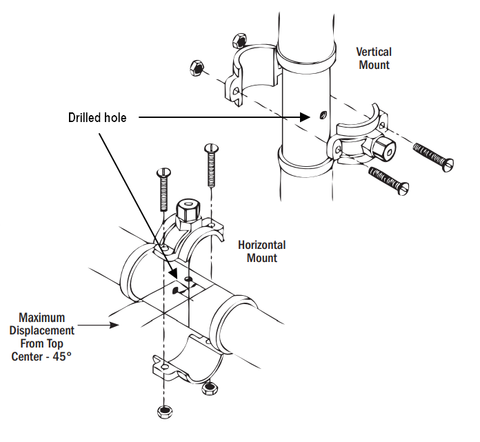
Download PDF instructions to help you repair your air gap leak.
Dual Inlet Air Gap - 1/4" push-in
Protect your water quality with a reliable air gapBackflow contamination can quietly compromise your water quality, but a properly installed air gap provides a proven safeguard. Whether you're upgrading a reverse osmosis system or replacing a dishwasher air gap, Fresh Water Systems carries durable, high-quality options you can trust. Browse our selection of air gap faucets and fittings, and reach out to our water experts if you need help selecting the right components.
You might also like:
- What Is a Backflow Prevention Device and How Does It Work?
- What Is a Water Pressure Regulator and How Does It Work?
- How to Remove Microplastics from Drinking Water


Comments
My problem is different. My air gap is now leaking constantly. It’s not s clog. I’ve used pipe cleaners, and compressed air to blow it all out. Doesn’t matter, still leaks. Even if I disconnect drain tube from the saddle and let that drip into a bowl, water is still coming out the air gap… help!
Our dishwasher air gap spills water out into the sink and all over the counter. Isn’t it clogged somewhere?
Thanks
Thank you so much for this whole article. It was very informative and easy to understand. I fixed the leak quickly. It was the drain clog in the saddle. Thx again
I took off the drain tubing to the saddle and made sure that it was cleaned out, and it is lined up with a hole. For some reason water is coming out the air hole of fixture. Is there any way to flush air out of it so it doesn’t push water out that instead of down the drain?. I have made sure there’s no obstructions in the drain line from the faucet to the drain saddle and everything is how it should be.
Installed brand new northstar system, and it is constantly seeping water out of air gap hole and no water will come out of spout when turned on.
We have a vent hole that leaks air constantly. The only way to silence it is to place something over the hole to smother it. It is still leaking air, but at least we can’t hear it. It will shut off momentarily and then just randomly start back up again. Any suggestions?
I got a new system and water only drains and comes out of air hole. It doesn’t seem to fill the system or tank. All connections have been triple checked.
Great question, Seth!
Noise from an airgap is common. Depending on the location of the drain saddle connection to the drain, the noise of water dropping into the water in the ‘P’ trap can sometimes make that constant ‘gurgle’ sound as it slowly pushes water through the trap. The diagram shows how water enters the drain line. This sound occurs only when system is making water. If it seemingly never stops, turn the tank valve off and see if the system shuts off (gurgle stops). If after several minutes it continues, your system may have an issue causing the shut off diaphragm to not function.
Hopefully this helps!
Hi Manuel,
Air gap leaks are always due to water not being able to flow into the drain. If the system has been installed for some time without leaking and the sink drain flows normally, then the connection at the drain pipe may be clogged.
Disassemble the clamp assembly and clean it out. If it is clogged, then there’s a good chance the tubing may be partially clogged as well. Also, check to make sure the clamp assembly still lines up with the hole in the drain pipe.
My drain hose is draining constantly, regardless the faucet is on or off.
All the main draining is clean, still don not know the cause.
Is it time to replace the faucet or just fix it?