A water softener removes minerals that make your water hard. If you live with hard water it's obvious. Water hardness is one of the most common water quality concerns reported by consumers in the United States. It interferes with almost every cleaning task from laundering and dishwashing to bathing and personal grooming. A water softener makes your water usable and saves water heaters, coffee brewers, dishwashers, and other appliances from wear and tear.
What is hard water?

When it rains, water seeps through the soil and into our groundwater supplies where it picks up minerals. Water is a universal solvent - it grabs hold of any mineral it encounters and dissolves it. Water considered “hard” is high in dissolved minerals, specifically calcium and magnesium. The higher mineral concentration, the harder the water.
Symptoms of hard water
- Clothes that look dingy and feel harsh and scratchy
- Dishes and glass spotted from mineral build-up
- Film on glass shower doors, shower walls, bathtubs, sinks, faucets, etc.
- Sticky, lifeless hair
- Dry, itchy scalp and skin
Hard water does not cause any adverse health effects, so why soften water? Just because drinking hard water isn't bad for you, doesn't mean it's not costly in other ways.
Costs of hard water
- Inefficient or failed appliances
- Clogged pipes
- Increased electric bill because scale build-up makes it tougher to heat water
- Extra detergent, shampoo, and cleaning product expenses
How a water softener system works
The most common and effective way to eliminate the effects of hard water is to remove the minerals that cause hardness. Water softeners remove calcium and magnesium by ion exchange. The hardness-causing mineral ions are captured by the softener’s resin and exchanged for sodium or potassium ions. Soft water contains no scale-causing minerals.
Ion-exchange water softening
- The tank of a water softener is filled with resin beads covered with sodium ions. As hard water passes through, the resin beads act like a magnet attracting the calcium and magnesium ions, or hardness, in exchange for the sodium ions.
- Eventually, the resin beads become saturated with mineral ions and must be "re-charged." This process is called regeneration.
- During regeneration, a strong brine solution is flushed through the resin tank, bathing the resin beads in a stream of sodium ions. These sodium ions replace the accumulated calcium and magnesium ions that are sent to the drain.
- Regeneration goes through a few cycles including backwash and brine draw. The process is controlled electronically by the control valve on top of the resin tank.
- Once the regeneration process is complete, the resin bed is fast rinsed to remove excess sodium.
- The softener is ready to remove hardness as the water enters the home.
The brine tank
The water softener’s brine solution begins in a separate tank next to the softener called a brine tank. Salt is specially formulated for the ion exchange process and to keep the resin clean. The salt mixes with water to create a brine solution that's flushed through the resin during regeneration.
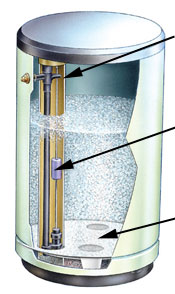 Brine well: The brine well is a cylindrical barrier that keeps the salt or potassium chloride away from the safety float and air check valve, allowing them to operate without any obstructions.
Brine Tank Safety Float: A safety float is included inside the brine tank to ensure that salt water does not overflow onto the floors if the injectors on the control valve get blocked up.
Grid plate (salt platform): A grid plate, placed at the bottom of the brine tank, acts as a tool to displace the water. This allows more water to flow into the brine tank so that enough brine solution is available during the regeneration process.
Is a water softener worth it?
How a water softener could benefit you
Household cleaning products: Hard water impairs the strength of cleaning products. Conditioned water delivers greater cleaning power by reducing the amount of soap needed by up to 70%.
Laundry and garment care: Your clothes will be softer, cleaner, and whiter, and the colors will be much brighter. Using soft water increases the life of clothing, towels, and linens up to 33% and extends the life of your washing machine.
Dishwashing and glassware: Dishes and glassware will be easier to clean and spot-free. Softened water is better for your skin, so your hands will feel softer and look better. Softened water also extends the life of your dishwasher.
Water heaters: According to a recent study by the Battelle Institute, hard water can lead to up to a 24% loss of efficiency in water heaters. With softened water, heaters maintain the original factory efficiency over a 15-year lifetime. The same is true of dishwashers or any other hot water appliance.
Bathing and showering: In the bathroom, your soap and shampoo will lather better, with less effort. Your hair and skin will feel noticeably cleaner and softer. Sinks, showers, tubs, and toilets will have less soap scum and grime.
Scale prevention on plumbing and piping: Over a period of time, scale forms and clogs plumbing. When the pipes clog, water flow is restricted, and water pressure reduces dramatically. Water softening eliminates these problems significantly and removes previously formed scale over time.
Reduced staining: Water softeners prevent unsightly rings, stains, or mineral build-up on bathtubs, showers, and sinks. Soft water also preserves the beauty of faucet fixtures and countertops.
How to calculate water softener capacity
- The amount for resin inside
- The amount of salt used for regeneration
- The level of hardness mineral to remove and the amount of water used.
If properly sized and well maintained, a good quality water softener (like the Neo-Pure High Efficiency) can last for 20 years or more.
When considering a water softener for your home, it is important to know the hardness levels and composition of your water. Hard water test strips allow you to quickly evaluate your water and ensure proper sizing when selecting a water softener.
What to keep in mind when installing a water softener
Water pressure: A water pressure range of 20-125 psi is required for the regeneration valve to operate effectively.
Electrical facilities: An uninterrupted alternating current (A/C) supply is required. Make sure the voltage supply is compatible with the unit before installation.
Existing plumbing: Replace any piping with heavy lime or iron build-up. If piping is clogged with iron, install a separate iron filter unit ahead of the water softener.
Location of softener drain and brine tank: Place the softener close to a clean working drain and connect according to local plumbing codes. The brine tank should be located within 20 feet of the water softener. The drain cannot be elevated more than 36 inches or exceed 20 feet in length.
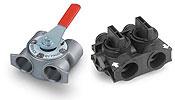
Bypass valves: Install a bypass valve if the unit is not equipped with one. If the valve leaks, turn the bypass from "In Service" to the bypass position. If the valve continues to leak, shut off the main water line and call your local service technician (preferably the one who installed the system) immediately.
Salt: Ensure that the salt level in the brine tank is always above the water line.
Periodic resin cleaning: Depending on water conditions, you may want to add resin cleaner to the system to ensure optimal performance.
Water Softener Repair Troubleshooting Guide
| Water Softener Problem | Possible Repair and Solution |
| Control valve fails to regenerate/cycle | If manual regeneration does not work, check for power connection. If manual does work, check to see if system is metering properly (consult the manual). |
| Water doesn't feel soft | Check salt level in tank. Make sure it hasn’t bridged. (Thump the side of the tank – if salt drops, manually regenerate.) Also check clock setting. |
| Using too much salt | Control valve should be serviced. |
| Loss of water pressure | Put system in by-pass. If pressure restores, then the system needs service. |
| Excessive water in brine tank | Control valve needs to be serviced – injector screen may be clogged. |
| After power outage | Reset system clock and ensure settings are correct. |